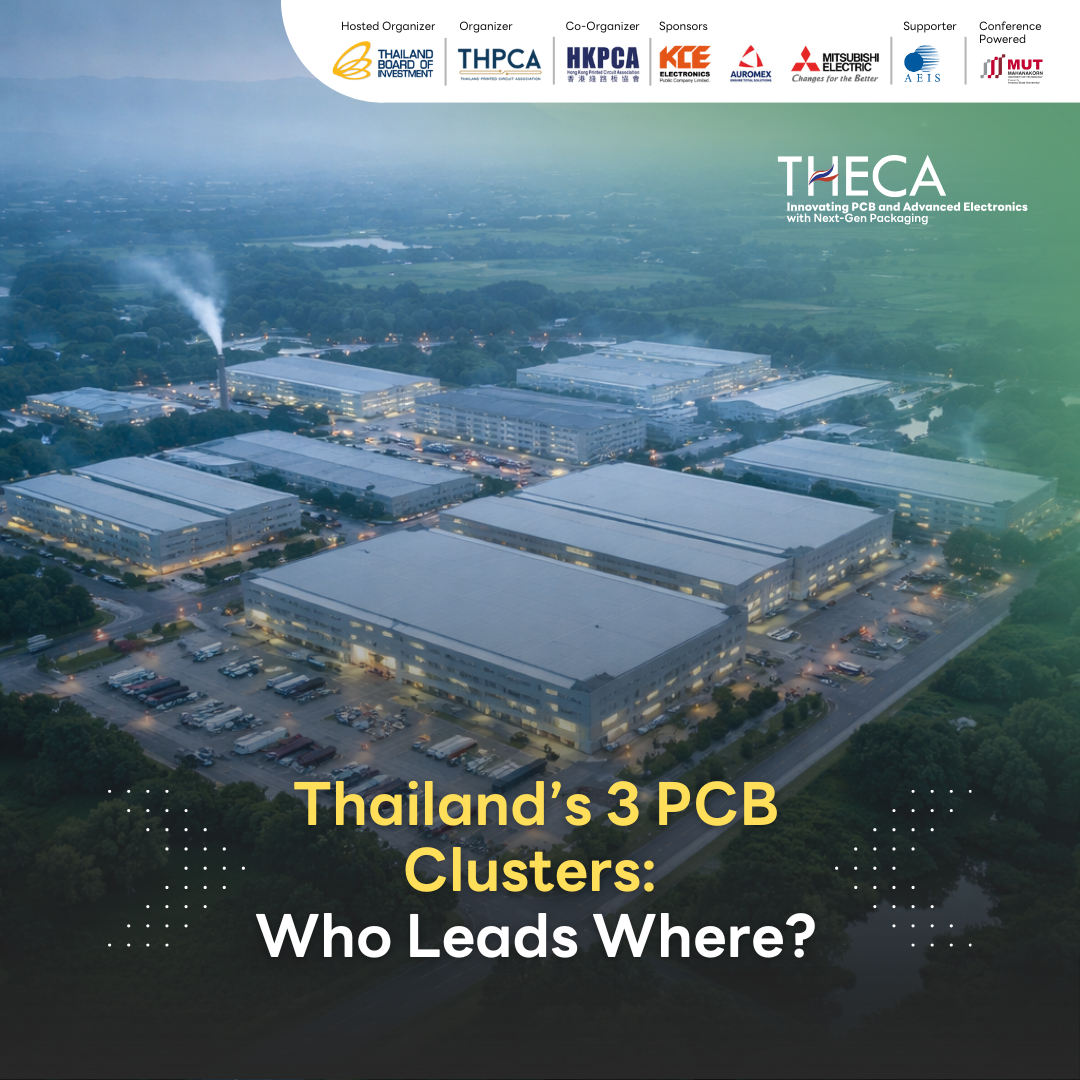


Over the past few years, Thailand’s PCB industry has not grown as a single, uniform landscape. Instead, it has evolved into three distinct geographic clusters, each with its own strengths, industrial logic, and target customers. Understanding these differences is essential for investors, OEMs, and suppliers who want to approach the right partners with the right value proposition.
Ayutthaya: The Established Stronghold
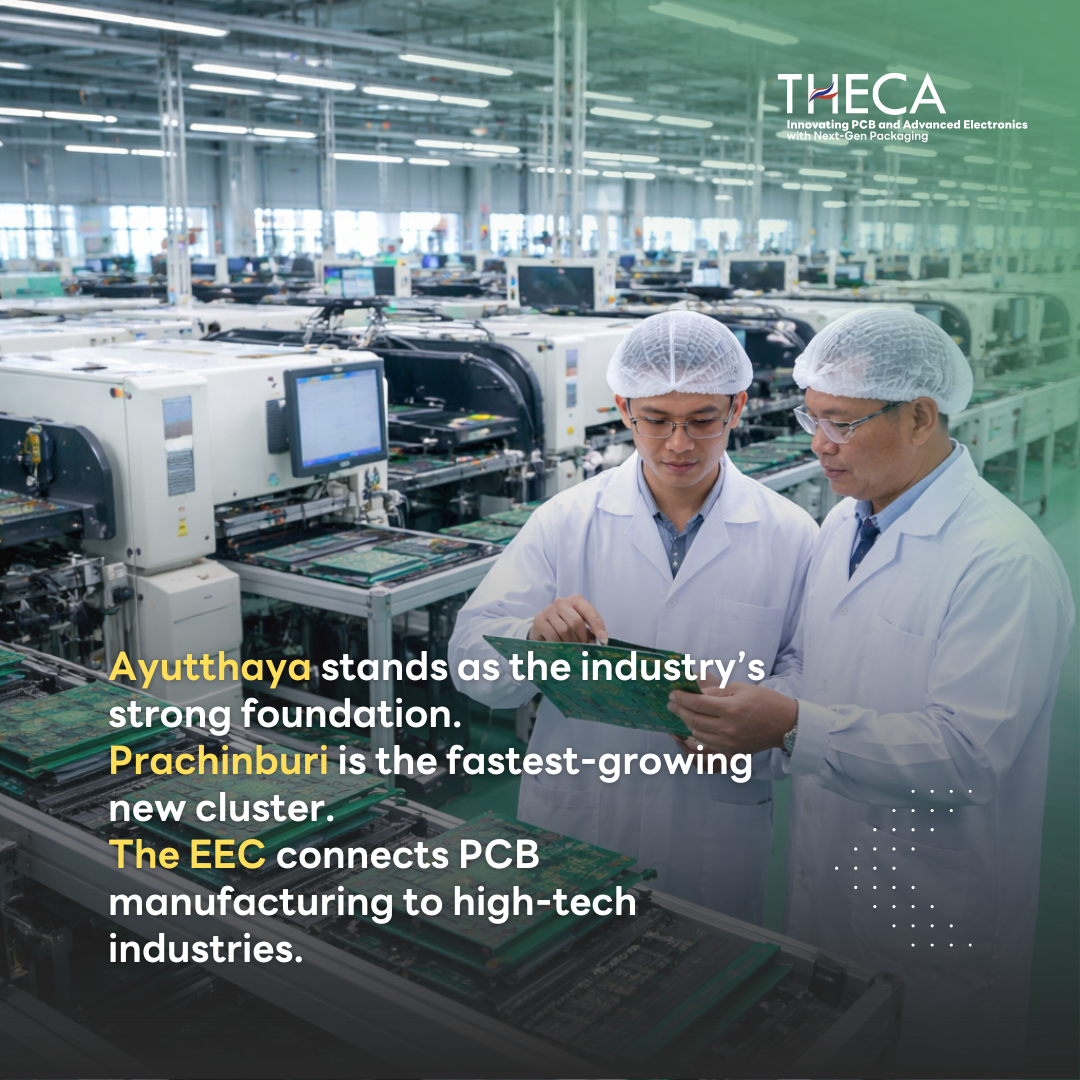
Ayutthaya represents the backbone of Thailand’s PCB industry. This cluster is home to long-established manufacturers with deep experience in multilayer PCBs, particularly those serving Japanese OEMs. Companies such as KCE, Mektec, and Fujikura have built strong production ecosystems here over decades.
The key advantage of Ayutthaya lies in its process maturity, stable quality standards, and long-term customer relationships, especially with Japanese automotive and electronics brands. This cluster is ideal for customers who prioritize reliability, consistency, and proven manufacturing capability over rapid experimentation.
Prachinburi: The Fastest-Growing Challenger
Prachinburi has emerged as the fastest-growing PCB cluster in Thailand. Unlike Ayutthaya, this area represents the new wave of expansion, with players such as CMK, Dynamic, and ZDT establishing or rapidly scaling operations.
Its strength lies in capacity expansion, flexibility, and speed. Prachinburi attracts manufacturers looking to capture new demand, diversify supply chains, and respond quickly to shifting global orders. For suppliers and investors, this cluster offers opportunities tied to growth momentum, greenfield investments, and scalable production models.
EEC (Chonburi–Rayong): The High-Tech Integration Zone
The Eastern Economic Corridor, covering Chonburi and Rayong, plays a different role altogether. Rather than focusing only on PCB fabrication, the EEC is designed as a high-tech integration zone, linking PCB production to PCBA, power electronics, and EV-related applications.
Companies such as Jove and Stanley illustrate how this cluster connects boards to systems. The EEC’s advantage lies in its proximity to advanced manufacturing, logistics infrastructure, and future industries like EVs and smart mobility. This makes it especially attractive for customers seeking end-to-end solutions, from PCB to assembled systems.
Three Clusters, Three Strategies
Ayutthaya delivers stability and depth. Prachinburi offers speed and expansion. The EEC provides integration and future-facing technology. Together, these clusters form a complementary ecosystem rather than direct competition.
The real question for investors and suppliers is not which cluster is “better,” but which cluster best matches your target customers and long-term strategy. As Thailand’s PCB industry continues to reposition itself within the global supply chain, choosing the right entry point will define who captures the next wave of growth.
🗓 THECA 2026 + Power2Motion | 26–28 August 2026 | BITEC Bangkok
📍 Innovating PCB and Advanced Electronics with Next-Gen Packaging
#thailandelectronicscircuitasia #power2motion #thpca #thailandprintedcircuitassociation #theca #theca2026